B2B SaaS Foodtech Marketplace
Harbest
Revolutionising the supply chain into a direct, scalable B2B marketplace.
COMPANY
Harbest
YEAR/S
2021 - 2024
ROLE
UX Research, Product Strategy, UX/UI, Design System, Brand

01 / ABOUT THE PROJECT
A B2B marketplace built to shorten the food supply chain
Harbest was a B2B marketplace connecting restaurants directly with farmers and producers, reducing intermediaries while improving product quality, pricing and working conditions for suppliers. Over three years, I led the evolution of the product experience and visual ecosystem as the company scaled.
Role & scope
Product Design, UX Research, UX/UI, Design System, Brand
PLATFORM
Native app · Mobile-first · B2B SaaS Marketplace
02 / USER INSIGHTS
Two sides of the same marketplace
Research combined interviews in farms and restaurants, direct feedback from Sales and Operations, and product Analytics. These insights shaped the experience from the beginning and continued to inform iterations over three years.
01
RESTAURANT BUYERS
Purchasing managers usually knew exactly what they needed and prioritized speed, density and repeatability over browsing.
02
FARMERS & PRODUCERS
Farmers and suppliers needed a simple way to receive demand, prepare orders and confirm their status.
BEHAVIOUR
Around 75% of usage came from mobile, while purchasing patterns were highly repetitive.

03 / FROM RESEARCH TO PRODUCT
Turning real behaviour into design decisions
Research findings were translated into five product decisions, focused on mobile usage, faster purchasing and repeat behaviour.
01
MOBILE FIRST
Designed around the dominant device rather than adapting desktop patterns later.
02
HIGH-DENSITY CATALOGUE
More products per viewport, compact list view and advanced filtering.
03
DIRECT ACTIONS
Quantity selection and add-to-cart without opening unnecessary detail pages.
04
REPEAT & RECURRING ORDERS
Reduced repetitive purchasing by reusing and scheduling previous orders.
05
CONTEXT OVER NAVIGATION
Modals and inline actions kept users in the purchasing flow.

04 / CORE EXPERIENCE
A faster professional purchasing flow
The ordering journey was redesigned around speed and continuity. Users could find products, adjust quantities, review their cart, reuse saved delivery details and complete checkout without unnecessary interruptions.

Less navigation. Less repetition. Faster purchasing.
05 / BEHIND THE EXPERIENCE
One restaurant order, multiple coordinated workflows
Harbest turned each restaurant order into coordinated supplier workflows, consolidated through its warehouse for next-day delivery. I also redesigned the internal tools used to manage orders, logistics, warehouses, users, margins and business performance.
Harbest
Multiple producers
Harbest warehouse
Restaurant

06 / DESIGNING FOR SCALE
A system built to grow with the business
As Harbest expanded from vegetables into meat, dairy, eggs and preserves, the product had to absorb new categories, pricing structures and operational complexity.
I built the Design System in parallel with the product, creating reusable patterns from real needs and evolving them as the platform grew.

07 / END-TO-END OWNERSHIP
From product to brand
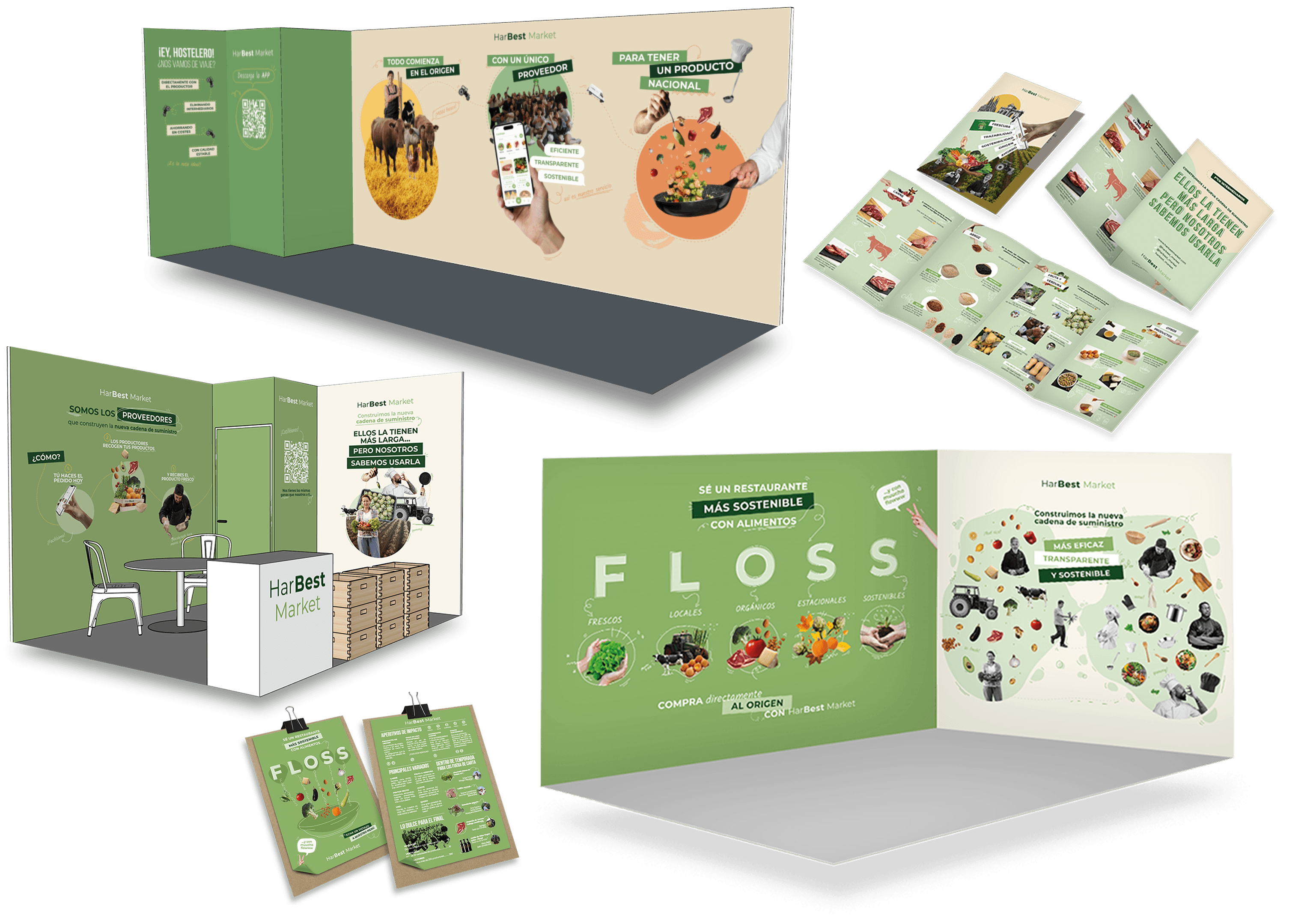
My role expanded alongside the company. As the sole designer, I worked across research, product strategy, UX/UI, Design System, QA and eventually led a complete rebrand in collaboration with Marketing.
Harbest shaped the way I work today: stay close to users, connect design decisions to business reality and build systems that can evolve over time.

01
USER PROXIMITY
02
SYSTEM THINKING
03
SCALABILITY
B2B SaaS Foodtech Marketplace
Harbest
Revolutionising the supply chain into a direct, scalable B2B marketplace.
COMPANY
Harbest
YEAR/S
2021 - 2024
ROLE
UX Research, Product Strategy, UX/UI, Design System, Brand
01 / ABOUT THE PROJECT
A B2B marketplace built to shorten the food supply chain
Harbest was a B2B marketplace connecting restaurants directly with farmers and producers, reducing intermediaries while improving product quality, pricing and working conditions for suppliers. Over three years, I led the evolution of the product experience and visual ecosystem as the company scaled.
Role & scope
Product Design, UX Research, UX/UI, Design System, Brand
PLATFORM
Native app · Mobile-first · B2B SaaS Marketplace
02 / USER INSIGHTS
Two sides of the same marketplace
Research combined interviews in farms and restaurants, direct feedback from Sales and Operations, and product Analytics. These insights shaped the experience from the beginning and continued to inform iterations over three years.
01
RESTAURANT BUYERS
Purchasing managers usually knew exactly what they needed and prioritized speed, density and repeatability over browsing.
02
FARMERS & PRODUCERS
Farmers and suppliers needed a simple way to receive demand, prepare orders and confirm their status.
BEHAVIOUR
Around 75% of usage came from mobile, while purchasing patterns were highly repetitive.
03 / FROM RESEARCH TO PRODUCT
Turning real behaviour into design decisions
Research findings were translated into five product decisions, focused on mobile usage, faster purchasing and repeat behaviour.
01
MOBILE FIRST
Designed around the dominant device rather than adapting desktop patterns later.
02
HIGH-DENSITY CATALOGUE
More products per viewport, compact list view and advanced filtering.
03
DIRECT ACTIONS
Quantity selection and add-to-cart without opening unnecessary detail pages.
04
REPEAT & RECURRING ORDERS
Reduced repetitive purchasing by reusing and scheduling previous orders.
05
CONTEXT OVER NAVIGATION
Modals and inline actions kept users in the purchasing flow.

04 / CORE EXPERIENCE
A faster professional purchasing flow
The ordering journey was redesigned around speed and continuity. Users could find products, adjust quantities, review their cart, reuse saved delivery details and complete checkout without unnecessary interruptions.

Less navigation. Less repetition. Faster purchasing.
05 / BEHIND THE EXPERIENCE
One restaurant order, multiple coordinated workflows
Harbest turned each restaurant order into coordinated supplier workflows, consolidated through its warehouse for next-day delivery. I also redesigned the internal tools used to manage orders, logistics, warehouses, users, margins and business performance.
Harbest
Multiple producers
Harbest warehouse
Restaurant

06 / DESIGNING FOR SCALE
A system built to grow with the business
As Harbest expanded from vegetables into meat, dairy, eggs and preserves, the product had to absorb new categories, pricing structures and operational complexity.
I built the Design System in parallel with the product, creating reusable patterns from real needs and evolving them as the platform grew.

07 / END-TO-END OWNERSHIP
From product to brand
My role expanded alongside the company. As the sole designer, I worked across research, product strategy, UX/UI, Design System, QA and eventually led a complete rebrand in collaboration with Marketing.
Harbest shaped the way I work today: stay close to users, connect design decisions to business reality and build systems that can evolve over time.
01
USER PROXIMITY
02
SYSTEM THINKING
03
SCALABILITY
B2B SaaS Foodtech Marketplace
Harbest
Revolutionising the supply chain into a direct, scalable B2B marketplace.
COMPANY
Harbest
YEAR/S
2021 - 2024
ROLE
UX Research, Product Strategy, UX/UI, Design System, Brand
01 / ABOUT THE PROJECT
A B2B marketplace built to shorten the food supply chain
Harbest was a B2B marketplace connecting restaurants directly with farmers and producers, reducing intermediaries while improving product quality, pricing and working conditions for suppliers. Over three years, I led the evolution of the product experience and visual ecosystem as the company scaled.
Role & scope
Product Design, UX Research, UX/UI, Design System, Brand
PLATFORM
Native app · Mobile-first · B2B SaaS Marketplace
02 / USER INSIGHTS
Two sides of the same marketplace
Research combined interviews in farms and restaurants, direct feedback from Sales and Operations, and product Analytics. These insights shaped the experience from the beginning and continued to inform iterations over three years.
01
RESTAURANT BUYERS
Purchasing managers usually knew exactly what they needed and prioritized speed, density and repeatability over browsing.
02
FARMERS & PRODUCERS
Farmers and suppliers needed a simple way to receive demand, prepare orders and confirm their status.
BEHAVIOUR
Around 75% of usage came from mobile, while purchasing patterns were highly repetitive.
03 / FROM RESEARCH TO PRODUCT
Turning real behaviour into design decisions
Research findings were translated into five product decisions, focused on mobile usage, faster purchasing and repeat behaviour.
01
MOBILE FIRST
Designed around the dominant device rather than adapting desktop patterns later.
02
HIGH-DENSITY CATALOGUE
More products per viewport, compact list view and advanced filtering.
03
DIRECT ACTIONS
Quantity selection and add-to-cart without opening unnecessary detail pages.
04
REPEAT & RECURRING ORDERS
Reduced repetitive purchasing by reusing and scheduling previous orders.
05
CONTEXT OVER NAVIGATION
Modals and inline actions kept users in the purchasing flow.
04 / CORE EXPERIENCE
A faster professional purchasing flow
The ordering journey was redesigned around speed and continuity. Users could find products, adjust quantities, review their cart, reuse saved delivery details and complete checkout without unnecessary interruptions.
Less navigation. Less repetition. Faster purchasing.
05 / BEHIND THE EXPERIENCE
One restaurant order, multiple coordinated workflows
Harbest turned each restaurant order into coordinated supplier workflows, consolidated through its warehouse for next-day delivery. I also redesigned the internal tools used to manage orders, logistics, warehouses, users, margins and business performance.
Harbest
Multiple producers
Harbest warehouse
Restaurant
06 / DESIGNING FOR SCALE
A system built to grow with the business
As Harbest expanded from vegetables into meat, dairy, eggs and preserves, the product had to absorb new categories, pricing structures and operational complexity.
I built the Design System in parallel with the product, creating reusable patterns from real needs and evolving them as the platform grew.
07 / END-TO-END OWNERSHIP
From product to brand
My role expanded alongside the company. As the sole designer, I worked across research, product strategy, UX/UI, Design System, QA and eventually led a complete rebrand in collaboration with Marketing.
Harbest shaped the way I work today: stay close to users, connect design decisions to business reality and build systems that can evolve over time.
01
USER PROXIMITY
02
SYSTEM THINKING
03
SCALABILITY